Comment of “A novel mathematical model for predicting the benefits of physical activity on type 2 diabetes progression” De Paola, P. F., Borri, A., Dabbene, F., Keshavjee, K., PALUMBO, P., & Paglialonga, A. (2024). In Advanced Search Electrical Engineering and Systems Science – Systems and Control. eess.SY. https://doi.org/10.48550/arXiv.2404.14915
By Natalia Rosso
Imagine being told how much exercise you need—not just in vague terms, but with real, personalized numbers that reflect your body and your lifestyle. No guessing, no one-size-fits-all recommendations, just a smart, science-based plan to help you prevent one of the world’s fastest-growing diseases: type 2 diabetes.
Thanks to a new mathematical model developed by our partners from Italy and Canada (led by Dr. Paglialonga’s group from CNR- IEIIT), that kind of precision health advice may soon become a reality.
A Global Health Challenge
Type 2 diabetes (T2D) already affects over 500 million people worldwide, and the numbers are rising fast. It’s a chronic condition that causes blood sugar levels to soar, damaging organs over time and increasing the risk of heart disease, vision loss, and more.
But unlike many diseases, T2D is largely preventable, especially through lifestyle changes. Among the most powerful weapons we have? Physical activity.
Exercise helps the body use insulin more effectively, lowering blood sugar levels and slowing or even halting the disease’s progression. But until now, we haven’t had a reliable way to measure exactly how much exercise is needed, or what kind works best for each person.
Enter the Mathematicians
The study published last year, Dr. Pierluigi Francesco De Paola and colleagues built a novel mathematical model that can simulate how different types of physical activity influence the body’s glucose and insulin levels over time.
This isn’t your average fitness tracker. The model accounts for both:
- Short-term effects (like how a single workout affects blood sugar), and
- Long-term adaptations (such as improved insulin sensitivity and better beta-cell function in the pancreas).
One standout feature of the model is its inclusion of interleukin-6 (IL-6), a molecule released by muscles during exercise that plays a crucial anti-inflammatory role and helps protect the pancreas. This makes the model more biologically accurate than previous ones, which often overlooked these deeper mechanisms.
What the Simulations Revealed
Using the model, the researchers ran simulations across various exercise routines, and the results were eye-opening:
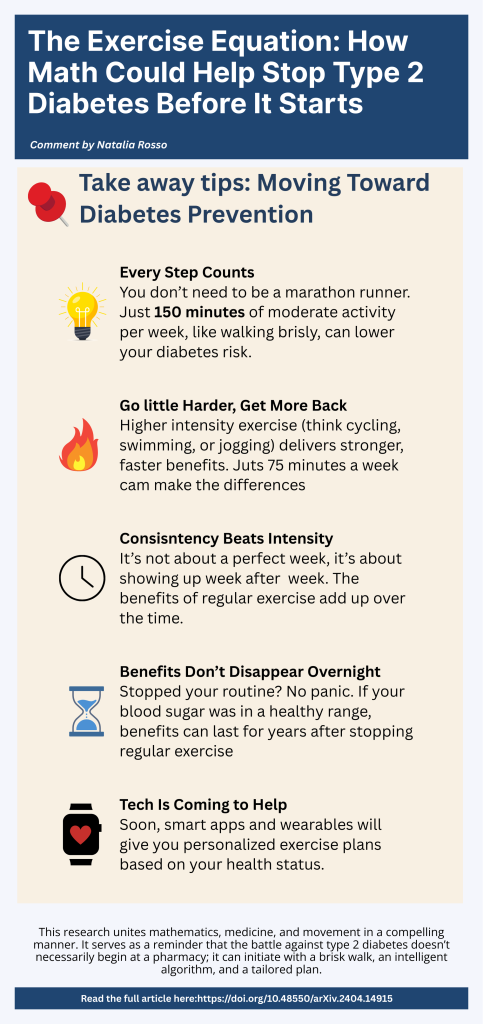
- Higher intensity brings higher reward. Moderate-to-vigorous workouts (like brisk walking or cycling) performed three times a week led to lower blood glucose levels and better insulin production over several years.
- Consistency counts. Even if you’re not an athlete, following global guidelines (such as 150 minutes of moderate or 75 minutes of vigorous exercise per week) delivered meaningful improvements.
- Stopping doesn’t erase your progress. In scenarios where participants stopped exercising after several years, the benefits often lasted well into the future, especially if blood sugar was well-managed at the time of stopping.
- More is better—up to a point. Increasing weekly exercise time from 150 to 400 minutes showed additional benefits, but gains began to plateau after that.
Why It Matters
This model could become the brain behind next-generation digital health tools, smartphone apps or wearables that give personalized exercise prescriptions based on your current health status, past activity, and risk level for developing diabetes.
Such tools could support doctors in making lifestyle-based recommendations or empower individuals to take charge of their health with real-time, data-backed guidance.
What’s Next?
While promising, the current model still has limitations. It doesn’t yet factor in diet, another major player in diabetes risk, or lifestyle elements like stress or sleep. It also needs to be tested across a more diverse population.
But the groundwork has been laid. With future upgrades, this model could become part of a larger ecosystem of precision prevention, tailored, digital-first strategies for fighting chronic diseases before they take hold.
The Bottom Line
This research brings together mathematics, medicine, and movement in a powerful way. It reminds us that the fight against type 2 diabetes doesn’t have to start in a pharmacy, it can start with a brisk walk, a smart algorithm, and a personalized plan.
And in a world where diabetes is rising fast, that kind of innovation is not just helpful, it’s essential.