Comment of “Modeling the cumulative benefits of regular physical activity on type 2 diabetes progression” Pierluigi Francesco De Paola, Alessandro Borri,Fabrizio Dabbene, Karim Keshavjee, Pasquale Palumbo, Alessia Paglialonga
By Natalia Rosso
Type 2 diabetes is one of the most common chronic diseases worldwide, affecting hundreds of millions of people. While doctors have long known that physical activity helps reduce the risk, a new study shows how and why exercise can protect the body over many years, and even continue working after someone stops exercising regularly.
Our researchers partners from the CNR in Italy, in collaboration with University of Toronto in Canada, developed a computer-based model that tracks how the body responds to exercise over time, focusing on blood sugar control and insulin function. Their findings suggest that regular physical activity can significantly delay, and in some cases prevent, the onset of type 2 diabetes.
Exercise Leaves a Lasting “Biological Memory”
Unlike most previous research, which focuses on what happens during or immediately after exercise, this study examined the cumulative effects of physical activity over months and years.
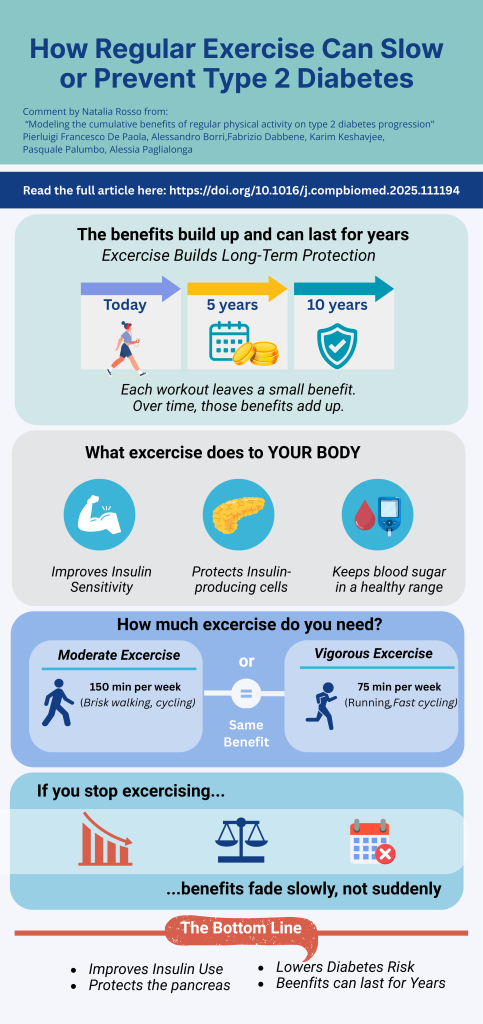
The model shows that each exercise session leaves behind a small biological benefit. Over time, these benefits add up, improving how the body uses insulin and helping protect the pancreatic cells that produce it. These changes lead to better long-term control of blood sugar, a key factor in preventing diabetes.
In simple terms, exercise trains the body to handle sugar more efficiently, and the body remembers that training.
How Much Exercise Is Enough?
The findings support existing global health guidelines.
According to the model:
- 150 minutes per week of moderate exercise (such as brisk walking), or
- 75 minutes per week of vigorous exercise (such as running or cycling)
provide similar protection against diabetes.
Increasing exercise time or intensity leads to greater benefits, but only up to a point. The study found that benefits tend to level off beyond about 400 minutes of moderate exercise per week, suggesting that more is not always better.
What Happens If You Stop Exercising?
One of the most encouraging findings is that the benefits of exercise can last long after workouts stop.
The model successfully reproduced results from major real-world prevention studies showing that people who exercised consistently for several years often maintained better blood sugar control for many years afterward. This was especially true for individuals who had already lowered their blood sugar levels before stopping.
However, the study also found that light or inconsistent exercise may not be enough to provide lasting protection.
Why Exercise Works Better for Some People Than Others
The researchers also tested how people with different risk profiles might respond to exercise. By simulating hundreds of “virtual individuals,” they accounted for differences in genetics, diet, metabolism, and exercise habits.
The results showed that:
Most people benefit from regular exercise, even those with high genetic risk
People at higher risk need more consistency to see strong effects
Skipping too many workouts significantly reduces the protective benefit
In other words, exercise doesn’t have to be perfect — but it does have to be regular.
Why This Matters
Type 2 diabetes places a growing burden on healthcare systems worldwide. This research offers a powerful message: exercise is not just a short-term lifestyle choice, but a long-term investment in health.
The model developed in this study could eventually help doctors and digital health tools create personalized activity plans tailored to individual risk levels. While more real-world validation is needed, the findings strengthen the case for physical activity as a cornerstone of diabetes prevention.
The Bottom Line
Regular exercise can:
Improve how the body uses insulin
Protect insulin-producing cells
Lower blood sugar levels over the long term
Reduce the risk of developing type 2 diabetes — even years later
Starting early and staying consistent makes the biggest difference.